
Last updated September 10, 2026
Level 1 sweep and inspection to the NFPA 211 annual standard - flue, crown, cap, and flashing checked and photographed
Chimney sweep logs do not sweep chimneys. They loosen some creosote - which then falls where a brush and vacuum still have to collect it.
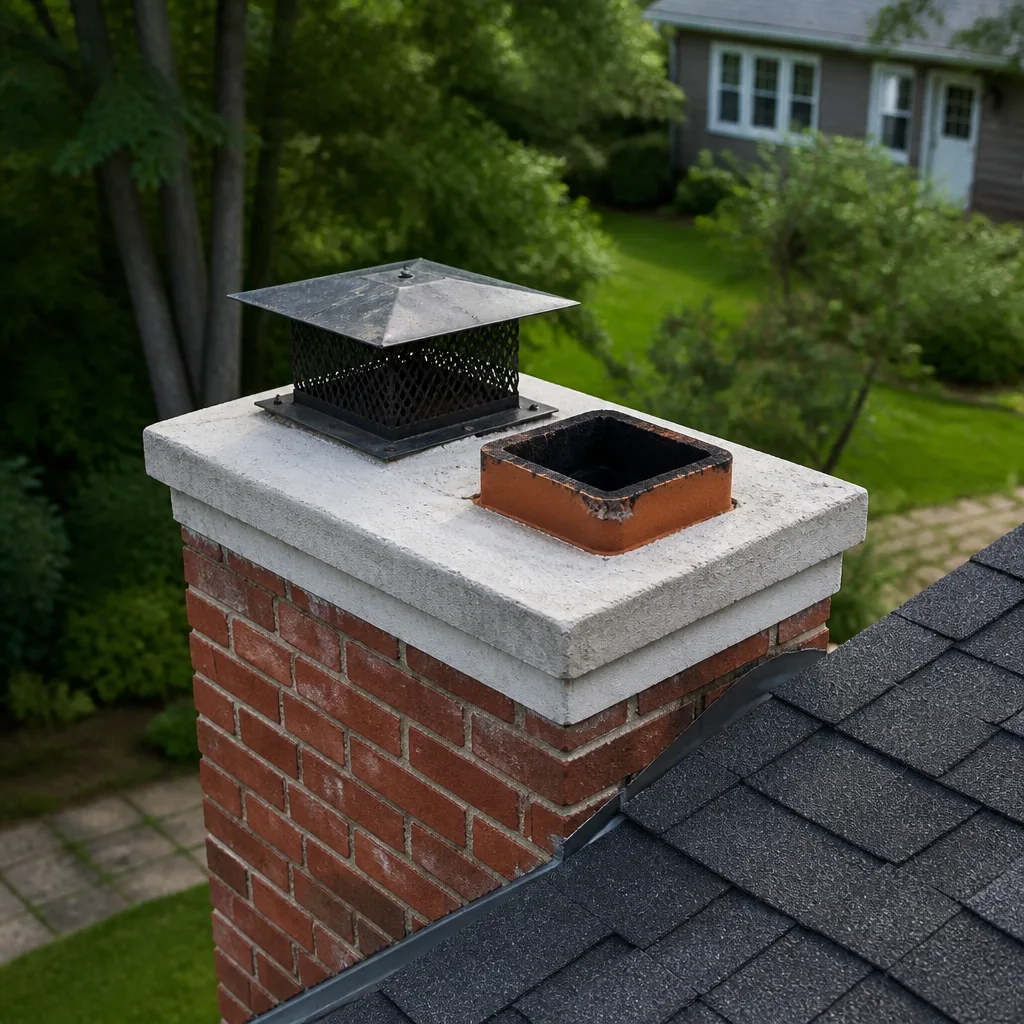
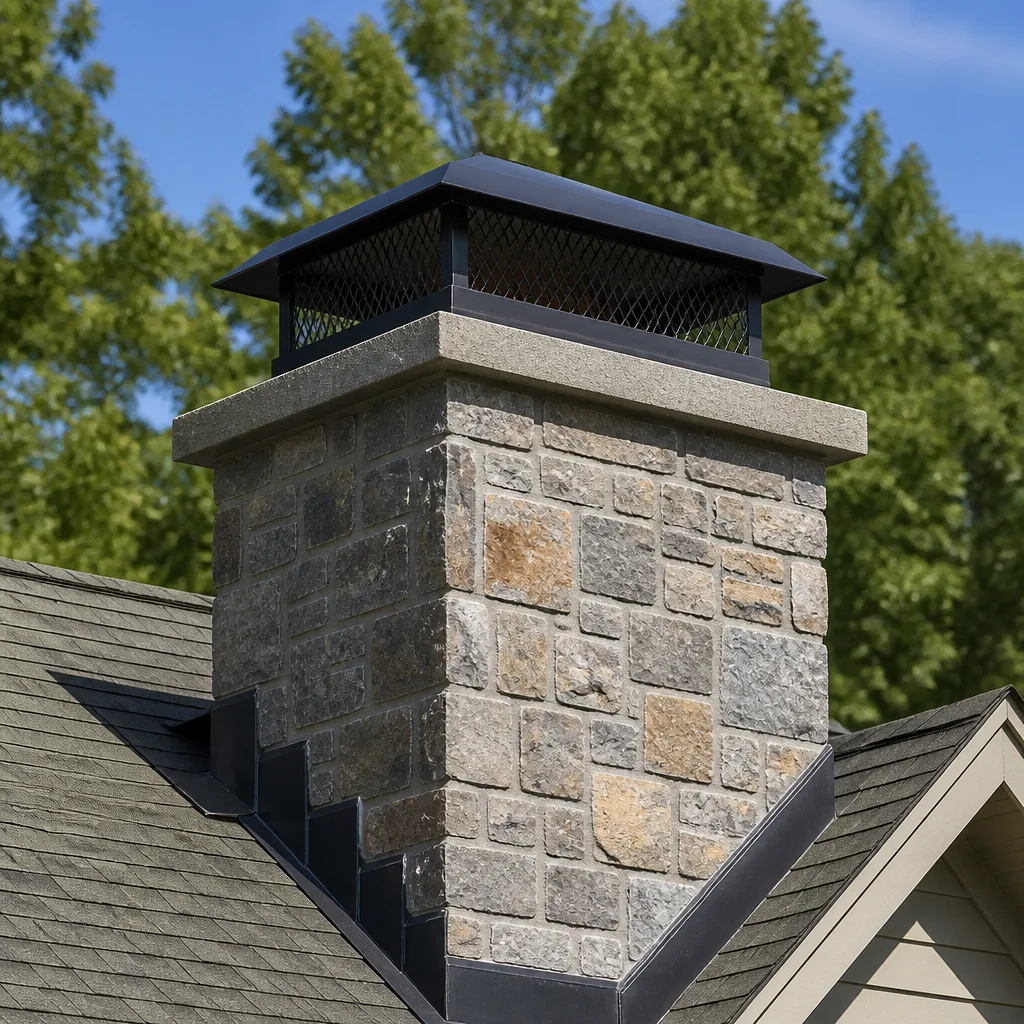
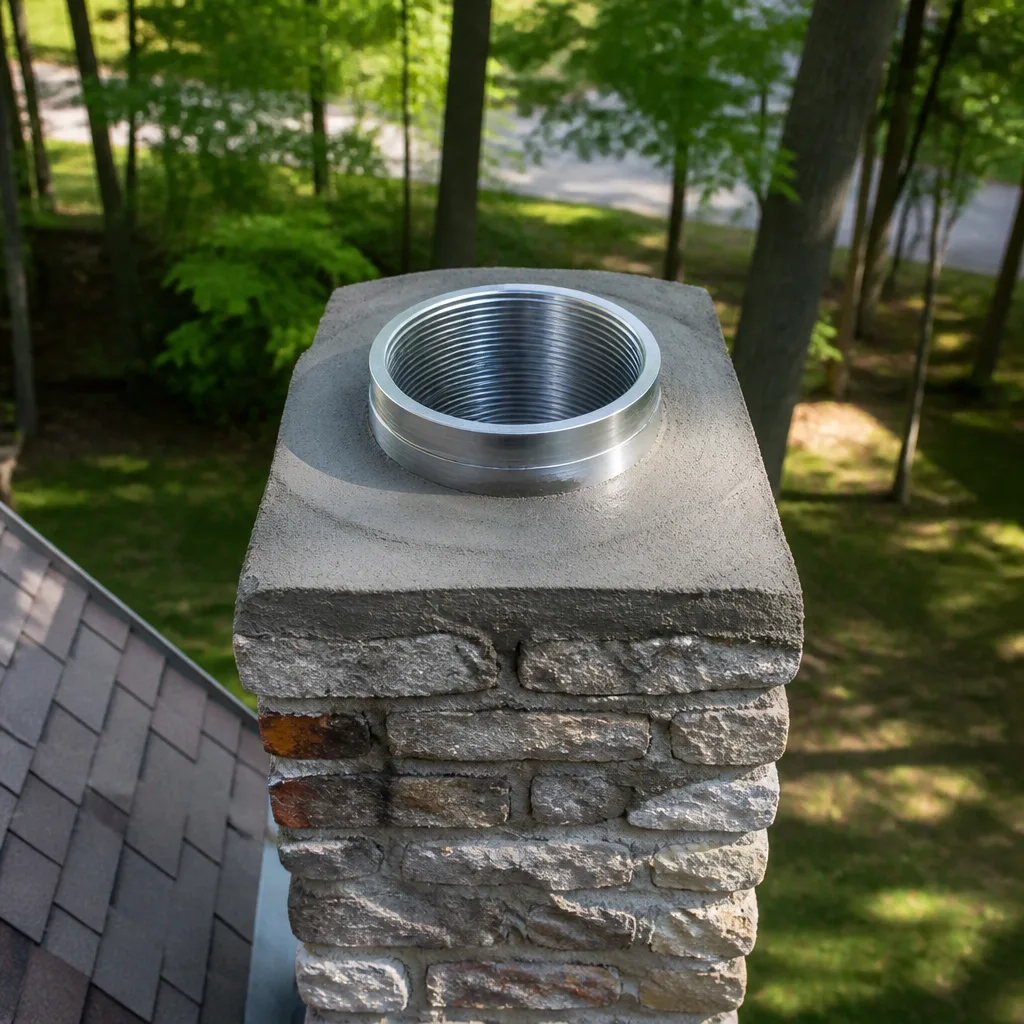
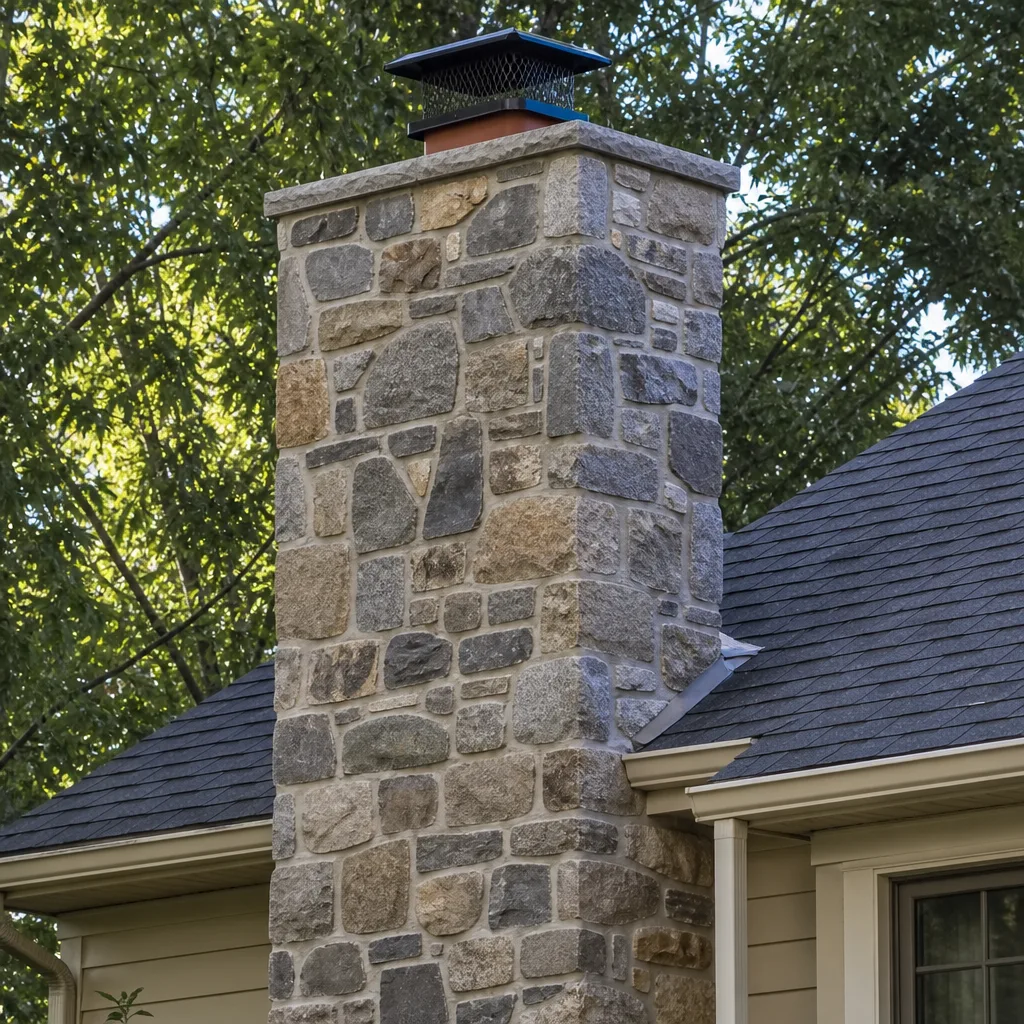
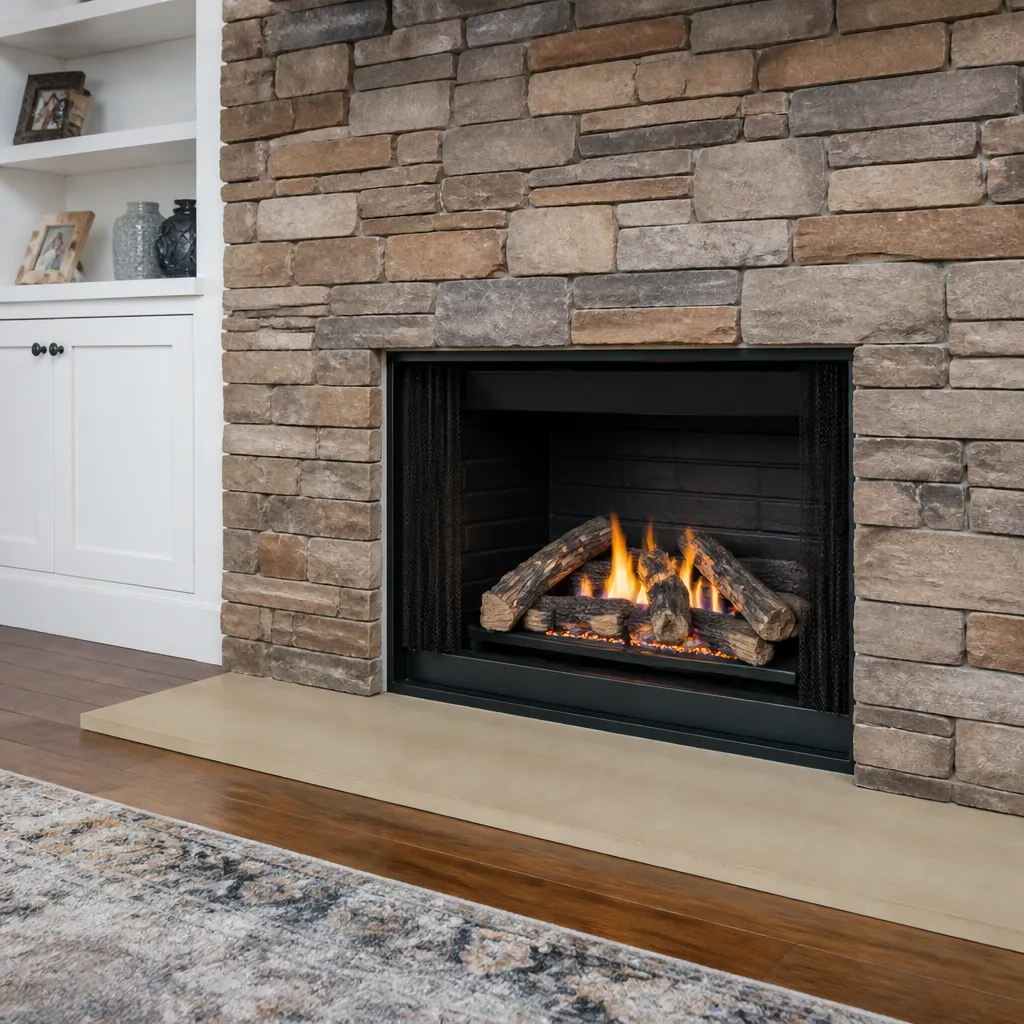
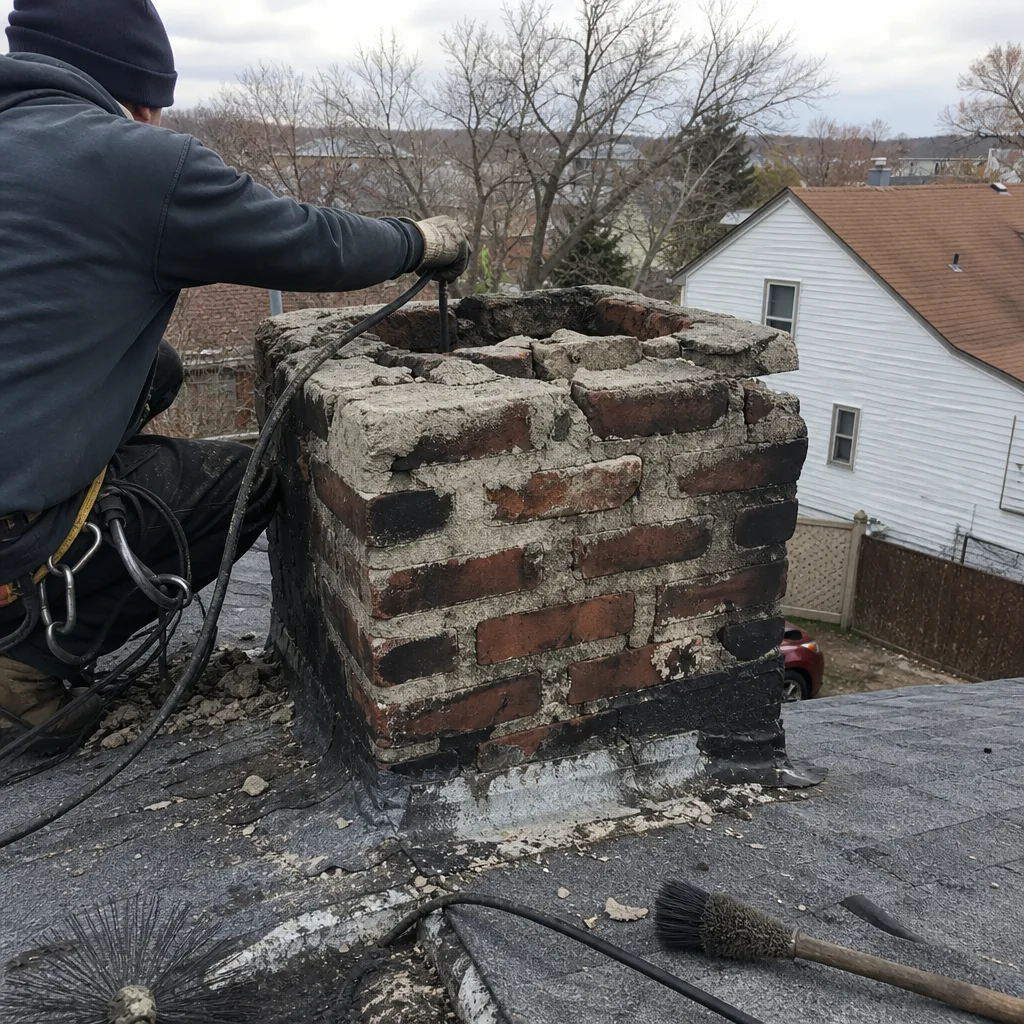 Before
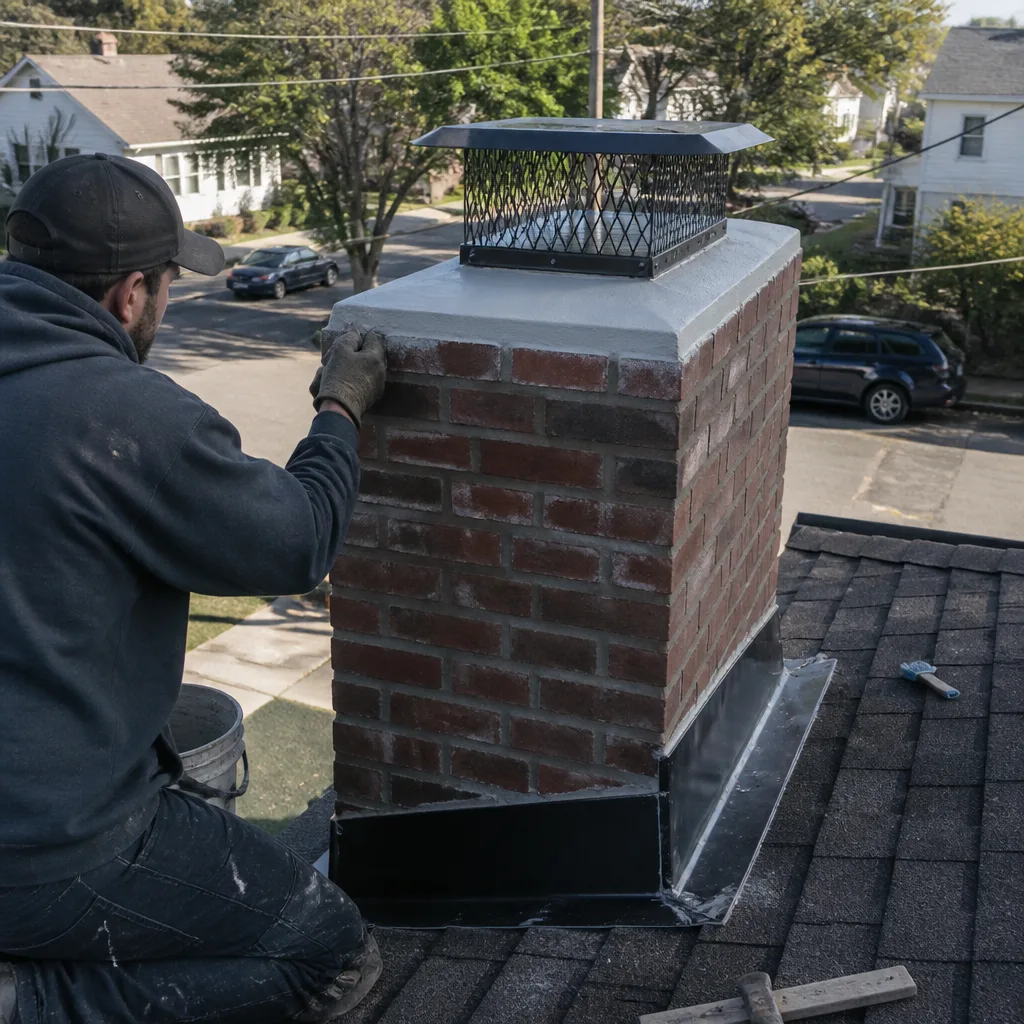 After
After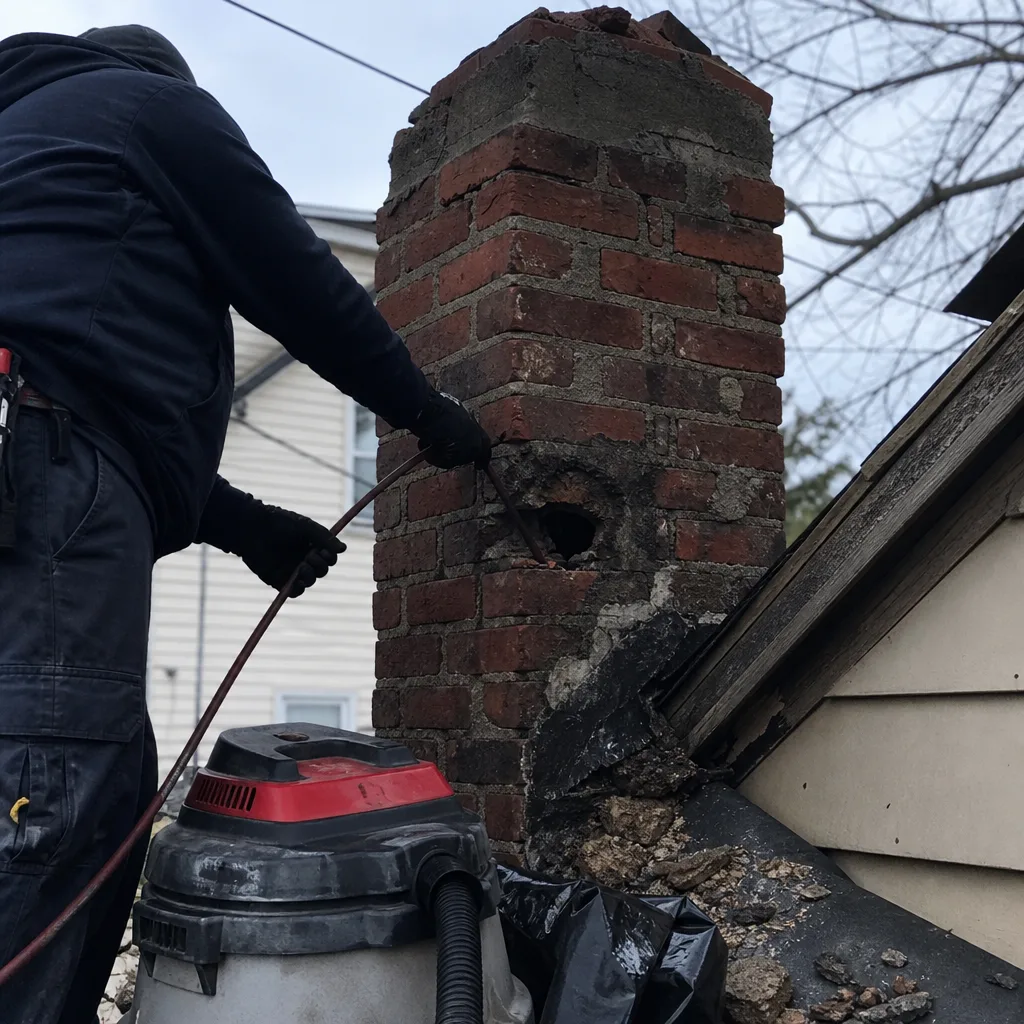 Before
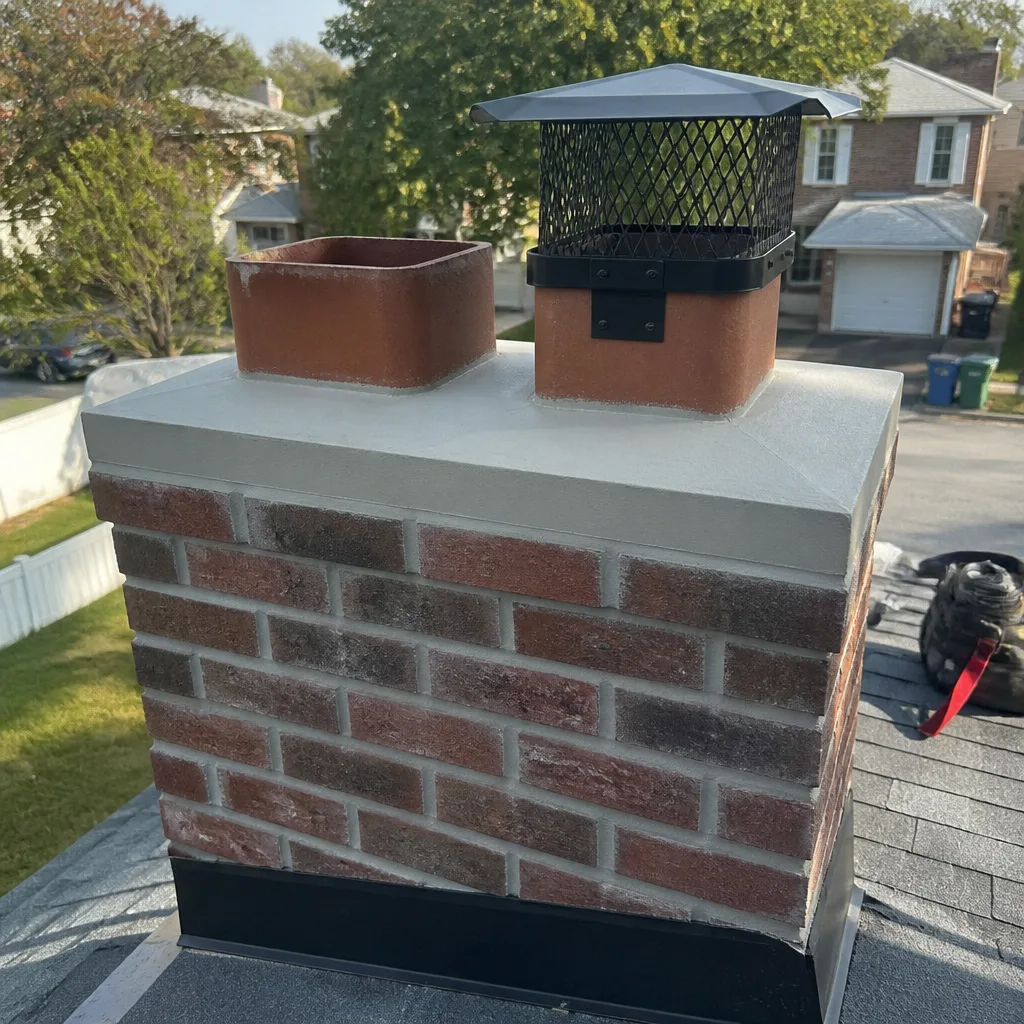 After
After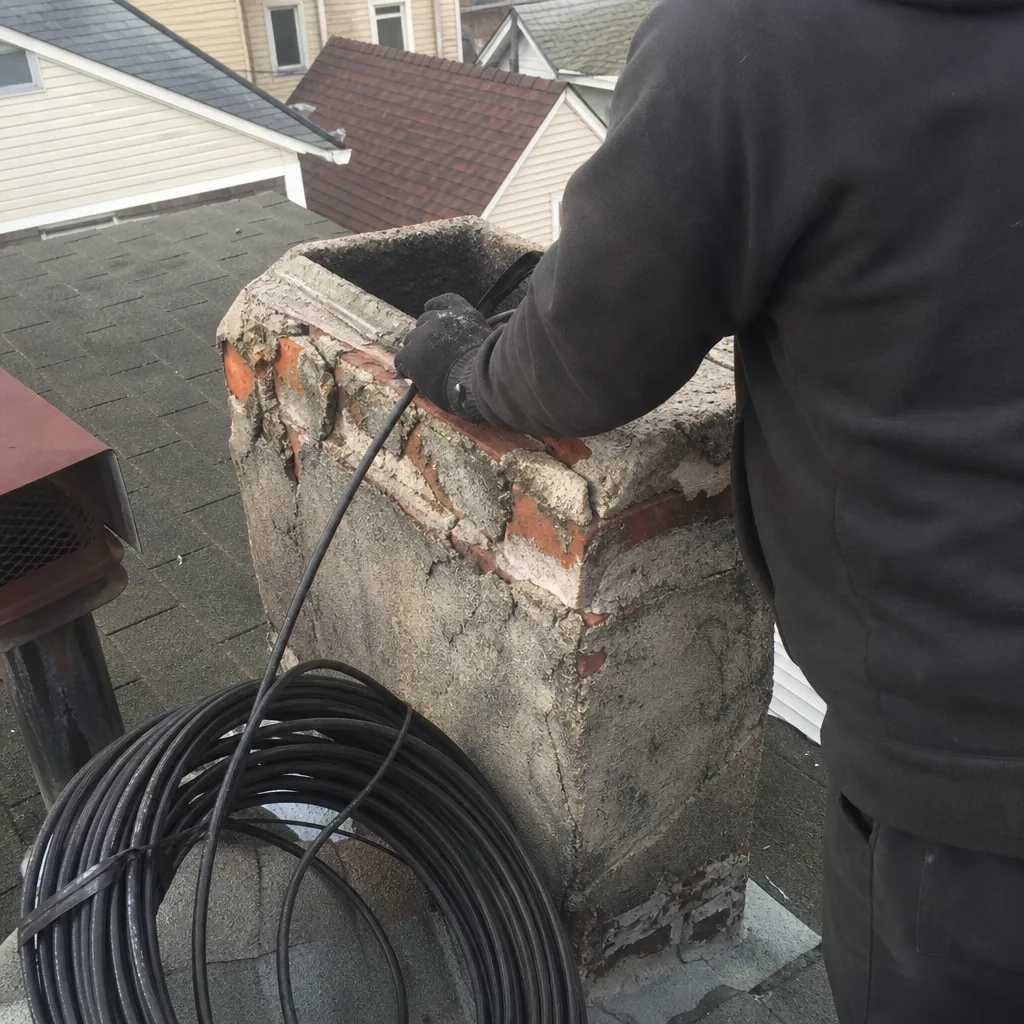 Before
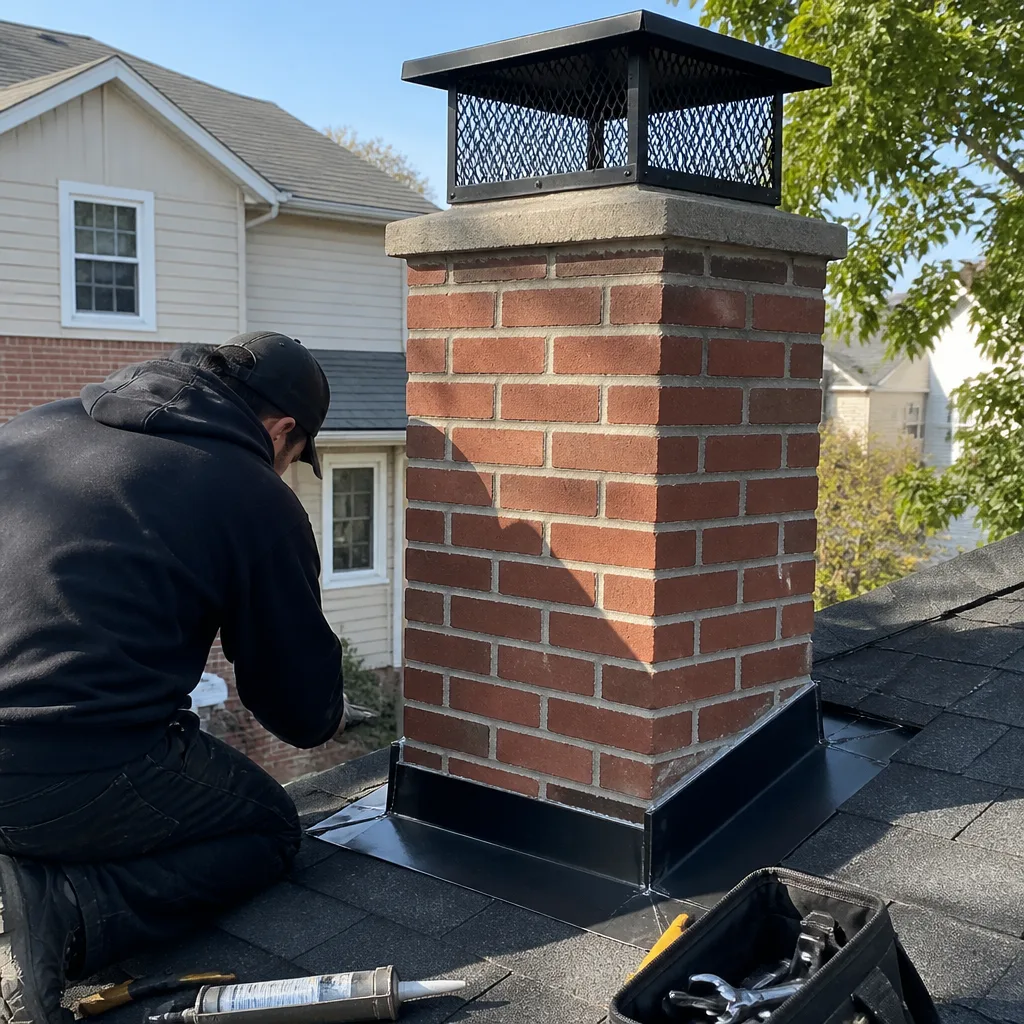 After
AfterChimney Cleaning Warning Signs: A Queens Homeowner’s Reference Guide
The most dangerous chimney in Queens isn’t the one dramatically crumbling onto the sidewalk. It’s the one that looks fine, smells faintly musty in July, and has a hairline crack in the liner no one has seen because no one looked. After 42 years of climbing roofs from Astoria to Bayside, we’ve learned that chimneys speak before they fail. They speak through smell, smoke behavior, odd sounds, and small visual changes that most homeowners dismiss. This guide teaches you that language, and you can find more guides & resources on our blog. You’ll learn to sort warning signs by urgency, understand what each odor and draft pattern means, and document problems so your first call to a sweep gets you an accurate estimate, not a sales pitch.
Quick Answer
A Queens homeowner should stop using their fireplace immediately if they smell gas, see flames or smoke where they don’t belong, or hear animal activity in the flue. Schedule a Level-2 camera inspection within 30 days for smoking into the room, visible exterior damage, or persistent creosote odors. Monitor and document slow draft, minor staining, or seasonal mustiness, but don’t ignore them - these often precede the urgent problems by one or two burning seasons.
Table of Contents
- The Warning Sign Index: Urgent, Soon, and Monitor
- What Chimney Odors Mean: A Queens Homeowner’s Guide
- Draft and Smoke Behavior Problems in Queens Homes
- Reading the Outside of Your Chimney: Visual Warning Signs
- How to Document Warning Signs Before You Call
- Why Queens Chimneys Fail Differently: Local Climate and Construction
- Common Mistakes to Avoid
- When to Call a Professional
- Frequently Asked Questions
- The Bottom Line
The Warning Sign Index: Urgent, Soon, and Monitor
Not every warning sign demands the same response. Misjudging urgency wastes money on emergency calls, or worse, delays action on a genuine hazard. We’ve sorted what we’ve seen across thousands of Queens inspections into three categories. Use this as your first filter.
Urgent: Stop Using Immediately
These conditions present active fire, carbon monoxide, or structural collapse risk. Do not light another fire. Call for inspection today.
- Smell of gas or petroleum near the fireplace or utility area. This indicates a possible gas leak from a fireplace insert, log lighter, or adjacent furnace/water heater. Evacuate and call your gas utility or fire department from outside.
- Smoke or flames visible from cracks in the masonry, mortar joints, or chimney chase. This means combustion gases are escaping the flue into the structure - an immediate fire risk to wall cavities and framing.
- Loud animal scratching, chirping, or rustling accompanied by debris falling into the firebox. Nesting material is highly flammable. In Queens, we see starlings, squirrels, and raccoons; all can block the flue or introduce parasites.
- Visible flames in the attic or wall adjacent to the chimney. This is a chimney fire that has breached the liner. Call 911 before calling us.
- Carbon monoxide detector alarm with no other identifiable source. A blocked or damaged flue can vent CO into living spaces. Treat every alarm as potentially chimney-related until proven otherwise.
Soon: Schedule Within 30 Days
These conditions will worsen and may become urgent by next burning season. Schedule a chimney cleaning and inspection in Queens within the month.
- Smoke rolling into the room during normal fire conditions. Indicates draft failure, partial blockage, or negative pressure problems. Often correctable, but not safe to operate until diagnosed.
- Visible spalling brick, missing mortar, or white efflorescence on the exterior. Water is entering and damaging the masonry freeze-thaw cycle. In Queens, this accelerates dramatically after January cold snaps.
- Cracked or deteriorated chimney crown. The crown is your chimney’s umbrella. Once it fails, water enters the core and destroys from within.
- Persistent creosote odor, especially in humid weather. Heavy creosote buildup is present and will ignite at lower temperatures. The smell intensifies when Queens humidity rises above 70 percent, which is most of summer.
- Damaged or missing chimney cap. Allows direct water and animal entry. A $200 cap replacement prevents $3,000 in liner damage.
Monitor: Document and Watch
These are early indicators, not emergencies. Photograph, note the date, and schedule at your next annual inspection if they haven’t progressed.
- Slightly slower draft than previous years. May indicate minor creosote buildup, subtle liner deterioration, or changes in surrounding vegetation or building envelope.
- Minor rust staining on the firebox or damper. Early moisture intrusion. Note whether it worsens after rain.
- Small, stable hairline crack in the firebrick. Common and often cosmetic. If it widens or new cracks appear, upgrade to “soon.”
- Seasonal mustiness that clears with dry weather. Typical in Queens basements and first-floor fireplaces during August humidity. Persistent year-round mustiness is “soon.”
What Chimney Odors Mean: A Queens Homeowner’s Guide
Your chimney has a distinct smell for every problem it develops. Learning to identify them saves diagnostic time and prevents unnecessary alarm. In our experience across Queens, odor complaints peak in July and August when humidity pushes every trapped scent into the house.
Creosote: The Asphalt-Tar Smell
Creosote odor is sharp, chemical, and reminiscent of roofing tar or asphalt. It intensifies in heat and humidity. If you smell it, you have significant buildup - typically Stage 2 or 3 glazed creosote that requires mechanical removal. This is not a DIY job - see our comparison of DIY vs Professional Chimney Cleaning: The Queens Homeowner’s Decision Guide - because the material is carcinogenic and the removal requires rotary chains or chemical treatment followed by proper disposal. In Queens, we see heavy creosote in homes that burn unseasoned wood or use the fireplace as primary heat. The risk is chimney fire: creosote ignites at approximately 451°F, and a roaring fire easily exceeds that.
What to do: Stop burning until swept. Schedule a professional cleaning with camera inspection to verify liner condition. Our chimney cleaning service in Queens includes photo documentation of buildup levels.
Water Intrusion: The Musty-Damp Smell
Mustiness that worsens after rain indicates water entering through the crown, cap, flashing, or porous brick. Queens faces a specific challenge: our freeze-thaw cycles are severe. Water enters in October, freezes by January, and expands with enough force to spall brick faces and crumble mortar. The smell is often accompanied by white efflorescence (salt deposits) or, in advanced cases, green or black staining from algae or mold.
What to do: Identify the entry point. Crown cracks are visible from the roof or with binoculars from the ground. Flashing gaps show as water stains on the ceiling near the chimney breast. A Level-2 inspection with camera confirms internal water damage to the liner.
Animal Intrusion: The Nesting or Decomposition Smell
Active nesting smells of dry grass, leaves, and musk. Decomposition is unmistakable and usually means a trapped animal. In Queens, chimney swifts are protected under federal law; their nests cannot be removed during breeding season (May through August). Squirrels and raccoons are not protected but require humane removal. The smell of decomposition demands immediate attention - it attracts insects and secondary pests, and the remains can block the flue.
What to do: Do not light a fire to “smoke them out.” This is inhumane and creates fire risk. Call a sweep who coordinates with wildlife removal, or a removal service that understands chimney access.
Backdraft from Gas Appliances: The Sulfur or Rotten-Egg Smell
Natural gas is odorless; utilities add mercaptan for detection. If you smell it near a gas fireplace, insert, or log lighter, you have a leak or incomplete combustion. More subtly, a “hot metal” or slightly sour smell can indicate a gas appliance backdrafting into the living space due to chimney blockage or negative house pressure. This is carbon monoxide risk without the obvious gas smell.
What to do: For mercaptan smell, evacuate and call the gas utility. For subtle hot-metal odors with gas appliances, schedule immediate inspection. We test draft pressure and spillage on every gas fireplace service.
Draft and Smoke Behavior Problems in Queens Homes
Smoke should rise. When it doesn’t, the cause falls into three categories: chimney problems, house problems, or weather problems. Queens presents unique combinations of all three.
Smoke Pouring Into the Room
This is the most alarming draft failure. Causes include:
- Blocked flue. Creosote buildup, animal nest, or collapsed liner. The blockage creates positive pressure; smoke follows the path of least resistance into your living room.
- Closed or stuck damper. Surprisingly common. Homeowners forget to open it, or corrosion from Queens humidity seizes it partially shut.
- Cold flue syndrome. On the north side of a Queens home, or after days of disuse, the air column in the flue can be colder and denser than the house air. The initial fire can’t establish upward flow. The fix: pre-warm the flue with a rolled newspaper torch or small kindling fire, damper open, for two minutes before loading fuel.
- Negative house pressure. Modern Queens renovations with tight windows, range hoods, and bathroom exhaust fans can depressurize the house. The chimney becomes an air inlet, not an outlet. This is increasingly common in post-war ranches with new HVAC systems in Bellerose and Floral Park.
Slow Draw: The Fire That “Just Doesn’t Pull Right”
A fire that burns sluggishly, with smoke lingering in the firebox and lazy flames, indicates insufficient draft. Causes include:
- Undersized flue for the fireplace opening. Common in 1920s Queens colonials where original coal-burning fireplaces were converted to wood without flue resizing. The ratio of fireplace opening to flue area matters; too large an opening overwhelms a small flue.
- Tall trees or new construction blocking wind currents. We see this in Forest Hills and Kew Gardens where mature oaks have grown since the house was built, or where neighboring additions changed roofline airflow.
- Liner deterioration. A clay tile liner with missing chunks or gaps allows draft-killing air infiltration. A stainless steel liner from DuraFlex restores proper diameter and smooth walls.
Smoke from Adjacent Flues in Shared Chimneys
Many Queens row houses, attached homes, and pre-war apartment conversions have shared chimney structures with multiple flues. Smoke from one fireplace appearing in another unit, or from a basement appliance venting into an upstairs flue, indicates:
- Missing or deteriorated wythe (the masonry divider between flues). This is a serious fire and CO risk, as combustion gases cross between units.
- Improper appliance connection to the wrong flue. We’ve found water heaters vented into fireplace flues in converted Queens basements.
These conditions require immediate Level-2 inspection with camera verification of flue separation. Chimney repair in Queens for shared structures often involves HeatShield cerfractory sealant or full liner replacement to re-establish safe separation.
Reading the Outside of Your Chimney: Visual Warning Signs
You don’t need a ladder to spot most exterior problems. Binoculars and knowing what to look for will suffice. Here’s what we check on every Queens roofline, and what you can see from the ground.
Spalling Brick: The Face Comes Off
Spalling is when the outer surface of a brick flakes, pops, or crumbles away, exposing the softer interior. It looks like someone took a hammer to random brick faces. The cause is freeze-thaw water damage: water enters porous brick, freezes, expands, and fractures the face. In Queens, this accelerates on chimneys with failed crowns or deteriorated mortar joints, and it’s worst on north-facing exposures that stay wet longest.
Structural meaning: Spalled bricks have lost compressive strength and weather resistance. Left untreated, the chimney shell weakens and may lean or collapse. Tuckpointing (grinding out and replacing failed mortar) and individual brick replacement address early cases. Widespread spalling may require partial rebuild.
White Efflorescence: Salt Crystals on the Surface
Efflorescence appears as white, powdery, or crystalline deposits on brick or block. It’s salt left behind when water evaporates through masonry. In Queens, we see it most on chimneys with chronic water entry and on new construction where soluble salts in mortar haven’t yet leached out.
Structural meaning: Persistent efflorescence confirms ongoing water intrusion. The salts themselves are cosmetic, but the water movement causing them destroys mortar from within. If you can brush it off and it returns within a month, you have an active water problem requiring crown, cap, or flashing repair.
Cracked or Deteriorated Crown
The crown is the concrete or mortar cap that seals the top of the chimney, shedding water away from the flue and masonry. A sound crown has a slight slope and overhangs the brick by at least two inches. Cracks in the crown, especially vertical cracks that align with flue tile joints, allow direct water entry into the chimney core.
In Queens, crown failure is epidemic on chimneys built before 1990 with simple mortar wash crowns instead of poured concrete. A proper replacement uses concrete with embedded wire mesh, sloped for drainage, with drip edges. We install crowns that meet this specification, sealed with professional-grade materials from Copperfield and Gelco.
Damaged or Missing Chimney Cap
The cap is the metal hat that covers the flue termination. It keeps rain, animals, and debris out while allowing smoke exit. Missing caps are visible from the ground as open flue pipes. Damaged caps may be rusted, detached on one side, or have clogged mesh screens.
A missing cap in Queens means direct water entry and guaranteed animal intrusion within one to two years. Caps from Famco and Olympia Chimney include proper mesh sizing for your fuel type - too small a mesh on a wood-burning flue clogs with creosote; too large allows small birds.
Flashing Gaps and Rust Stains
Chimney flashing is the metal intersection where the chimney penetrates the roof. Look for:
- Rust stains on the roof shingles below the chimney
- Lifted or separated metal pieces
- Caulk or tar blobs indicating previous “repairs”
- Water stains on interior ceilings near the chimney breast
Queens sees significant flashing failure after winter ice dam seasons, as freeze-thaw cycles separate step flashing from brick. Proper repair requires removing shingles, installing new step and counter flashing, and resealing - not more caulk over the problem.
How to Document Warning Signs Before You Call
A phone description of “my chimney smells funny” or “there’s some white stuff on the brick” forces us to schedule a general inspection. Specific documentation lets us bring the right equipment, assign the right technician, and often provide a preliminary estimate range before we arrive. Here’s how to do it well.
Step 1: Photograph Systematically
- Exterior, ground level: Stand across the street if possible. Capture the full chimney height, roof intersection, and surrounding trees. This shows lean, obvious spalling, and cap condition.
- Exterior, close-up: Use maximum zoom or binocular-assisted phone photography for crown, cap, and upper brick condition. Take multiple angles.
- Interior firebox: With the damper open and flashlight on, photograph the firebrick walls, damper mechanism, and smoke shelf area above. Note rust, cracks, or staining.
- Ceiling and walls adjacent to chimney: Document any water stains, peeling paint, or plaster damage.
- The problem itself: Close-up of the specific warning sign: the crack, the stain, the animal debris, the smoke pattern.
Step 2: Note Context and Timing
Write brief notes: when the problem started, whether it’s constant or seasonal, what makes it better or worse. Examples that help us:
- “Smell started in July after three days of rain, strongest in the morning.”
- “Smoke only when burning more than two logs, and only when the kitchen fan is on.”
- “Crack in crown visible since last winter, seems wider this spring.”
Step 3: Gather Your Chimney History
If available, locate:
- Date of last professional sweeping or inspection
- Name of company and what they reported
- Any previous repair invoices or warranties
- Approximate age of the house and whether the chimney is original
Step 4: Send Before You Schedule
Email or text your documentation when you call. At Hearthstone, we review photos before confirming appointments. This lets us flag if you need a Level-2 inspection with camera rather than a basic sweep, or if we should bring specific repair materials. For more on what to expect, read The Complete Guide to Chimney Cleaning in Queens. It also means your estimate reflects what we actually find, not a worst-case guess.
Why Queens Chimneys Fail Differently: Local Climate and Construction
Chimney advice from Arizona or even upstate New York doesn’t apply here. Queens chimneys face a specific set of stresses that shape how and when they fail.
The Freeze-Thaw Cycle
Queens averages 25 to 30 freeze-thaw cycles per winter - days above 40°F followed by nights below 32°F. Each cycle pumps water deeper into porous brick and mortar. A chimney with even minor water entry can accumulate catastrophic internal damage over five to ten winters. This is why we emphasize crown and cap maintenance so heavily; they’re the first line of defense against the cycle that destroys most Queens chimneys.
Coastal Humidity and Salt Air
Proximity to Jamaica Bay and the Atlantic means higher year-round humidity and occasional salt spray, especially in Howard Beach, Broad Channel, and the Rockaways. Salt accelerates metal corrosion - caps, flashing, and damper mechanisms deteriorate faster than inland. Stainless steel components from DuraFlex and Copperfield resist this corrosion far better than galvanized or aluminum alternatives.
Housing Stock Varieties
Queens contains at least five distinct construction eras, each with typical chimney problems:
- Pre-1920s frame and brick: Often unlined or with primitive parged clay liners. High risk of flue gas leakage into wall cavities.
- 1920s-1940s Tudor and colonial: Large fireplace openings, often converted from coal. Frequently have undersized flues for wood burning.
- Post-war ranch and cape: Simpler construction, often with factory-built metal chimneys. Metal fatigue and joint separation are common after 50+ years.
- 1960s-1980s attached and semi-attached: Shared chimney structures with wythe separation problems. Gas conversion errors frequent.
- Recent construction and renovations: Tight building envelopes create negative pressure; modern HVAC systems compete with chimney draft.
Tree Cover and Urban Density
Mature neighborhoods like Forest Hills, Kew Gardens, and parts of Bayside have tree canopies that block wind and trap moisture against chimneys. Reduced wind velocity means weaker natural draft, especially on low-slope roofs surrounded by taller trees. Meanwhile, dense construction in Astoria, Long Island City, and Flushing creates wind turbulence that can cause downdrafts on specific exposures.
Local Code and Permit Context
Chimney repairs in Queens fall under NYC Building Code and often require Department of Buildings permits for structural work, liner replacement, or alterations. Simple sweeping and minor cap replacement typically do not. We handle permit applications for qualifying work and coordinate inspections. Homeowners should be wary of any contractor who suggests significant structural work without permit discussion - it’s a red flag for both legality and accountability. For help vetting contractors, see How to Hire a Chimney Cleaning Contractor in Queens: A Step-by-Step Guide.
Common Mistakes to Avoid
- Assuming a chimney is “fine” because it looks fine from the street. The most dangerous damage is internal: cracked liners, hidden water entry, and creosote buildup in inaccessible smoke chambers. A Level-2 camera inspection reveals what eyes cannot.
- Using the fireplace to “test” whether a problem is serious. We’ve had homeowners light a fire to see if smoke still backs up, or to “burn out” an animal nest. This risks chimney fire, CO poisoning, and house fire. If you suspect a problem, stop burning until inspected.
- Hiring based on the lowest sweeping price. A $79 sweep that doesn’t include camera inspection, doesn’t document findings, and doesn’t carry proper insurance saves nothing if it misses a cracked liner. In Queens, legitimate Level-2 inspections with photo documentation typically run higher - and they’re worth it.
- Ignoring seasonal mustiness as “just basement smell.” In Queens humidity, mustiness that concentrates near the fireplace and worsens after rain is chimney-related until proven otherwise. Document it and mention it specifically when you call.
- Attempting DIY creosote removal with household tools. Stage 2 and 3 glazed creosote requires rotary chains, chemical treatment, or controlled combustion devices operated by trained technicians. Scraping with a wire brush spreads carcinogenic material into your living space and damages clay liners.
- Delaying cap or crown repair because “it’s not leaking yet.” By the time you see interior water damage, the chimney core has been saturated for multiple seasons. Cap and crown repairs are preventive maintenance with clear ROI.
- Neglecting gas fireplace annual service. Queens homeowners with gas inserts or log sets sometimes assume “clean burning” means no maintenance needed. Gas appliances produce corrosive condensation, debris accumulates in vents, and valves wear. Annual inspection prevents the subtle CO risks that detectors may miss.
When to Call a Professional
Call today if you smell gas, see smoke where it doesn’t belong, or your carbon monoxide detector alarms with no clear source. These are not wait-and-see situations. For smoking into the room, visible exterior damage, or persistent odors, schedule within 30 days before the next burning season begins. For monitored conditions - slower draft, minor staining, seasonal mustiness - document now and include the photos with your next annual inspection request.
At Hearthstone Chimney Co., we’ve served Queens homeowners for over 42 years. Our Level-2 inspections end with photos you can see and a plain-English verdict. Every job is backed by our 90-Day Done Right Promise in writing, with no arguing and no paperwork games. A live person answers our phones 24 hours a day, 7 days a week - not a voicemail, not a callback queue. Chimney repair in Queens and throughout our service area is done with professional-grade materials from DuraFlex, HeatShield, Gelco, and other industry-trusted brands. No builder-grade substitutes, no surprises on the bill.
Hearthstone Chimney Co. offers free estimates in Queens. Call (516) 531-6315.
Frequently Asked Questions
A professional chimney sweep with Level-1 inspection in Queens typically ranges from $200 to $350 for a standard wood-burning fireplace, depending on accessibility, buildup level, and whether the flue is lined. A Level-2 inspection with camera documentation, required for real estate transactions or when hazards are suspected, generally runs $350 to $550. Our $89 Seasonal Tune-Up covers basic gas fireplace service and inspection. We provide no-hassle upfront pricing - the number on the estimate is the number on the invoice. Call (516) 531-6315 for an exact quote; estimates are free.
The National Fire Protection Association recommends annual inspection for all chimneys, and sweeping when creosote buildup exceeds 1/8 inch. In Queens, where we burn primarily from November through March and face humid shoulder seasons that accelerate corrosion, most wood-burning fireplaces need annual sweeping. Gas fireplaces should be inspected annually for valve, vent, and combustion safety, though they typically require less frequent cleaning. If you burn more than three cords of wood per season, or burn unseasoned wood, you may need mid-season sweeping.
You need a new liner when the existing one is cracked, missing sections, improperly sized for your appliance, or absent entirely - and only if camera inspection confirms the damage. We don’t recommend liner replacement without photo evidence you can see yourself. In Queens, we see unnecessary liner sales based on vague “safety concerns” without documentation. A sound clay tile liner in a properly maintained chimney may last 50 years. A damaged one risks flue gas leakage, chimney fire spread to framing, and carbon monoxide intrusion. The decision should be based on documented condition, not pressure.
Skipped maintenance leads to progressive, predictable damage. Creosote accumulates and eventually ignites, causing chimney fires that crack liners and damage masonry. Water enters through minor crown or cap defects, freezes, and destroys brick and mortar from within. Gas appliance vents corrode or clog, creating carbon monoxide risks. In Queens specifically, the freeze-thaw cycle accelerates every problem by a factor of two or three compared to milder climates. The homeowner who skips five years of maintenance typically faces repair costs five to ten times higher than the maintenance would have cost.
Summer heat and humidity activate odors trapped in creosote deposits and moisture-affected masonry. In Queens, July and August humidity regularly exceeds 75 percent, which volatilizes the compounds responsible for creosote odor and pushes musty air down the flue into conditioned space. Air conditioning creates negative pressure that draws chimney air inward. The smell is diagnostic: sharp and chemical indicates creosote; musty and damp indicates water intrusion; musky and organic indicates animal activity. Each requires different treatment.
A single, stable hairline crack in firebrick is often cosmetic and safe for use, provided the crack doesn’t widen during firing and no fragments are loose. Multiple cracks, widening cracks, or missing chunks indicate thermal shock damage and require repair before continued use. In Queens, we see accelerated firebrick deterioration in fireplaces converted from coal to wood without proper firebrick specification - coal burns differently and the original brick may not tolerate wood-fire thermal cycling. When in doubt, have it photographed and assessed. We offer free second opinions on any written estimate if another company has recommended extensive firebox rebuild.
The Bottom Line
Chimneys in Queens give warning before they fail, but the warnings require attention and interpretation. Sort what you observe into urgent, soon, and monitor categories. Learn the specific smells and what they indicate. Watch how smoke behaves and note when it changes. Examine the exterior seasonally for new cracks, white deposits, or missing pieces. Document everything with photos and context before you call. And never let a contractor recommend expensive work without showing you camera evidence you can understand.
The master sweep’s approach is steady observation, plain explanation, and work that doesn’t need to be redone. That’s how we’ve operated for over 42 years, and it’s how we intend to keep serving Queens homeowners for decades to come.
Written by Russell Haines, Owner at Hearthstone Chimney Co., serving Queens since 2014.